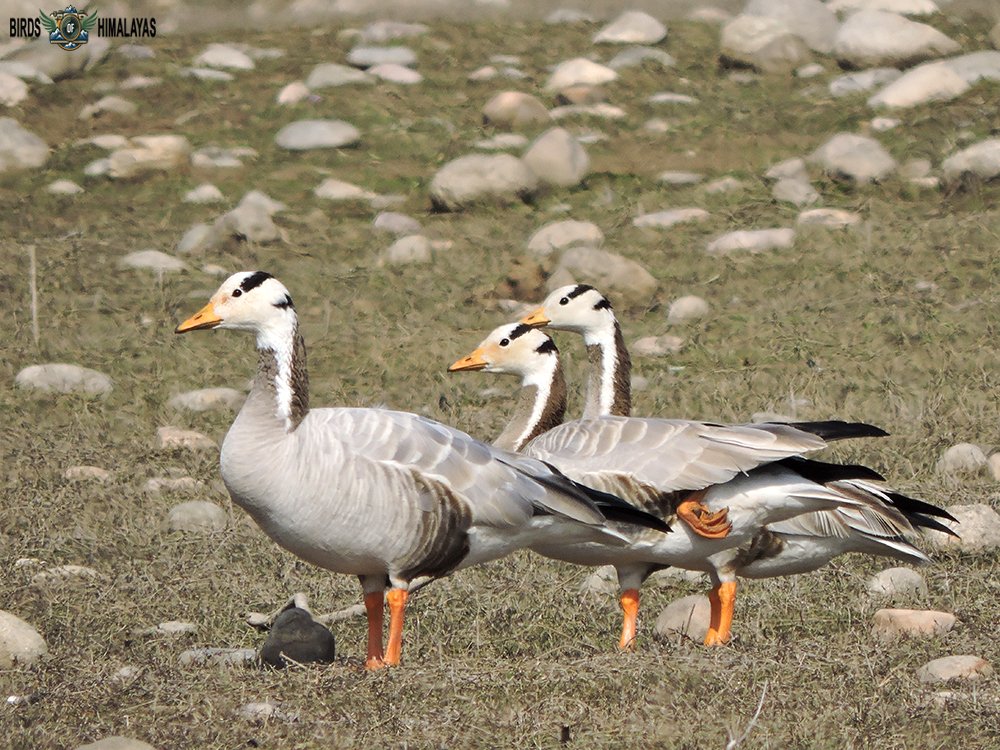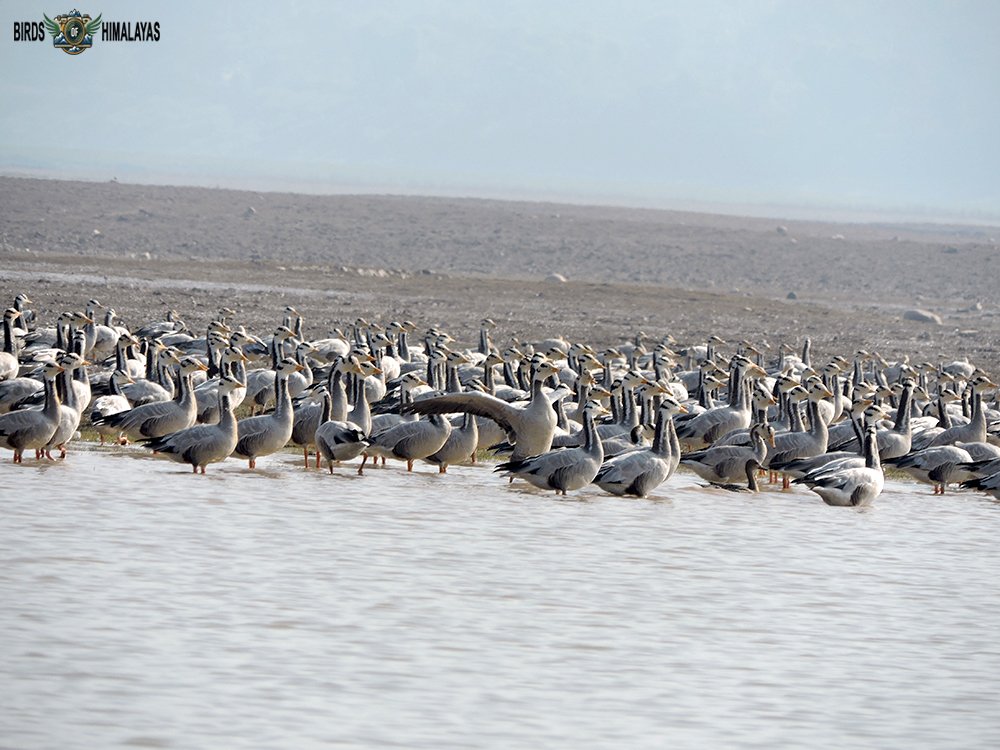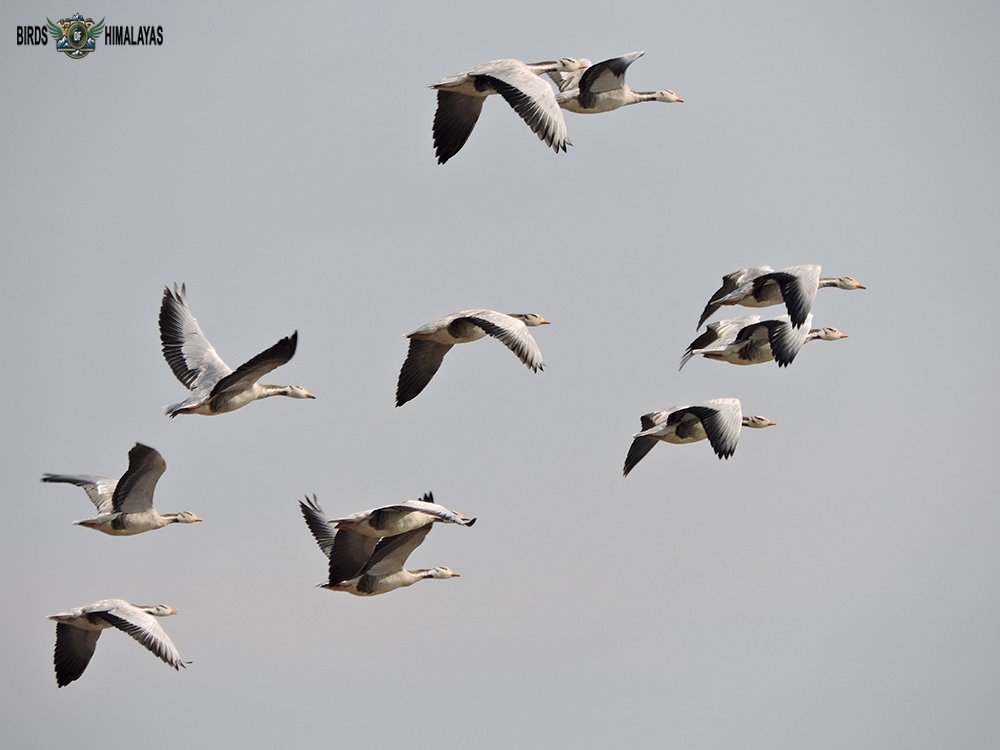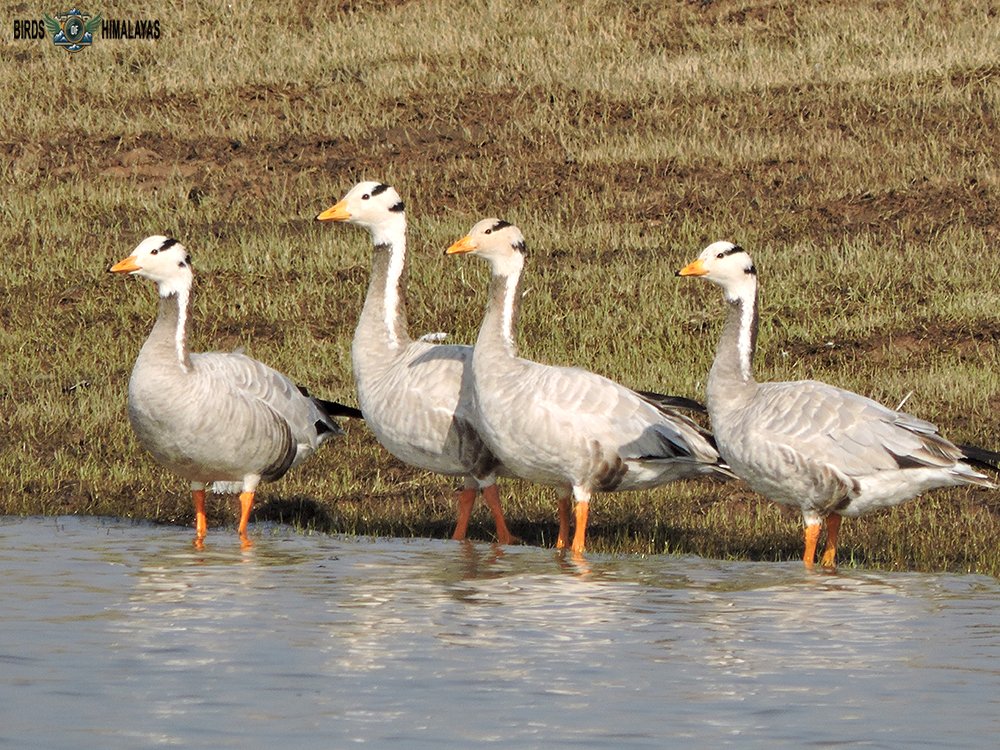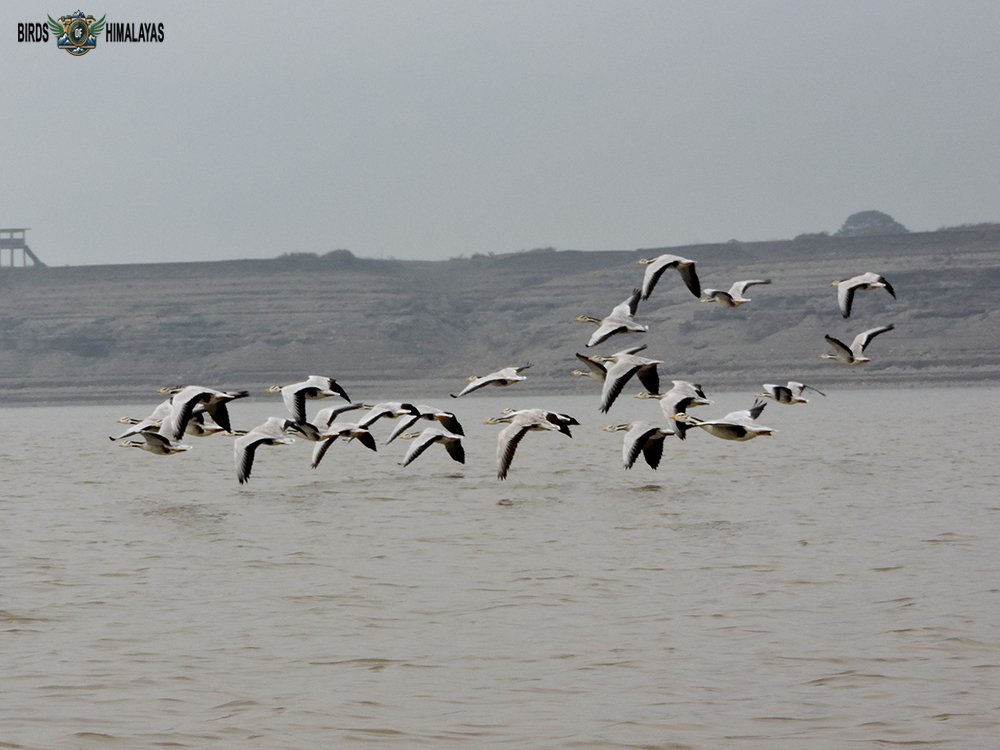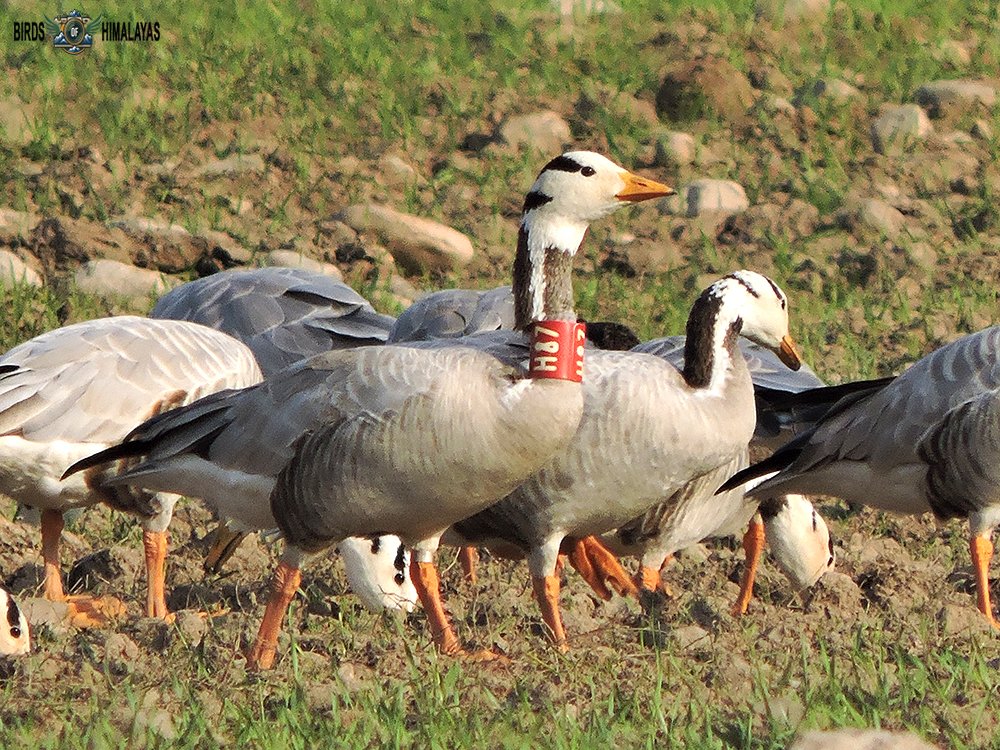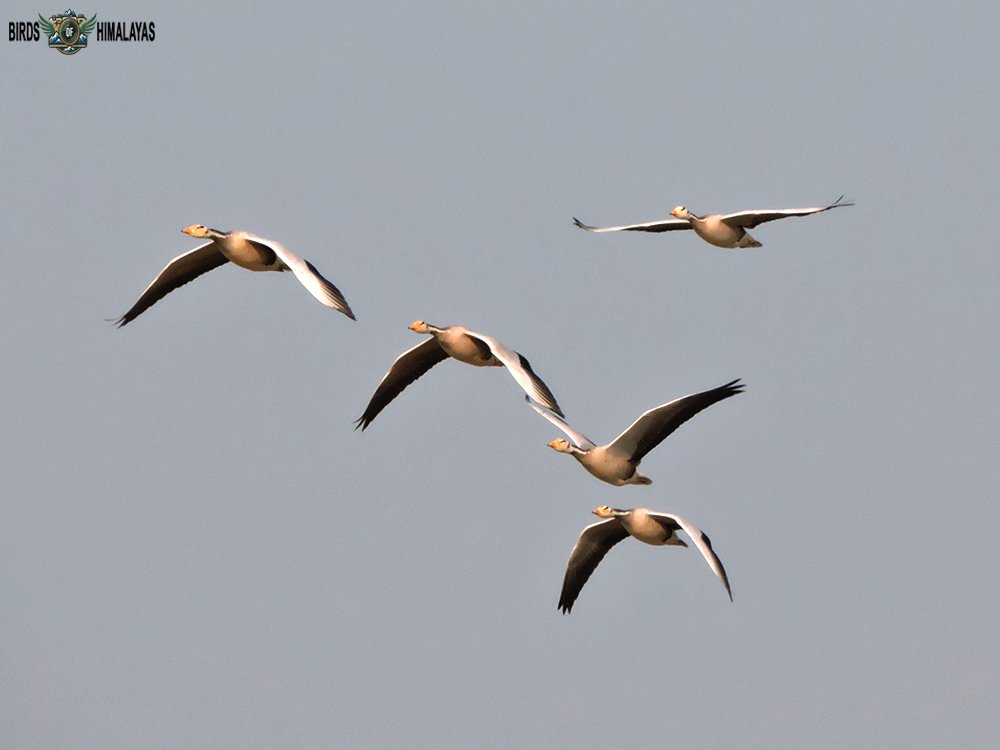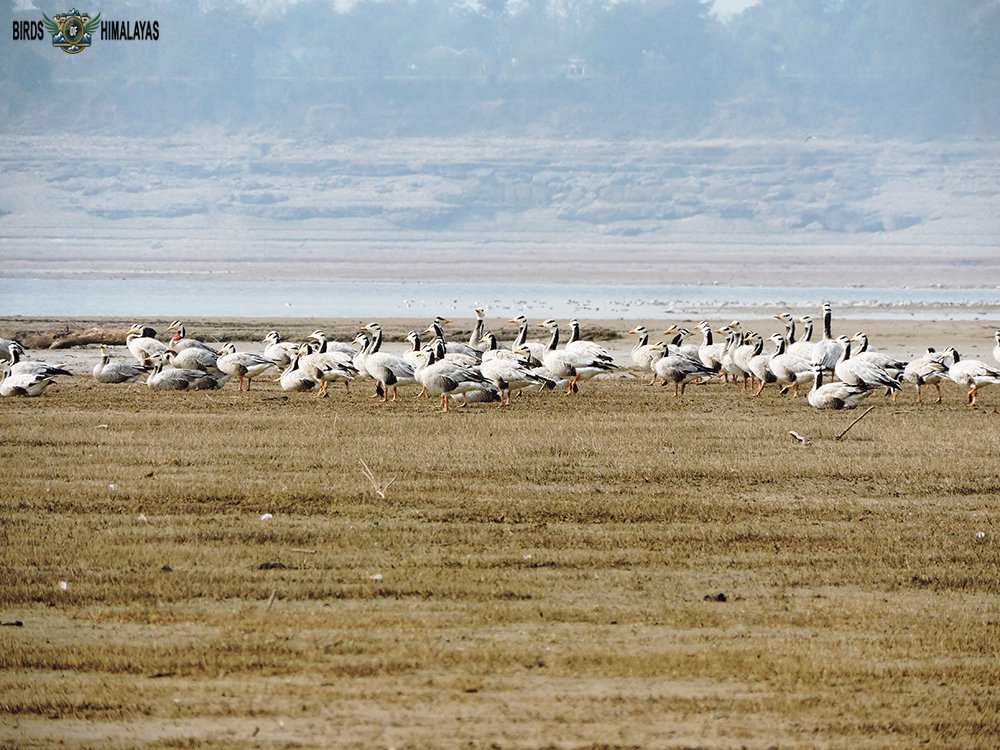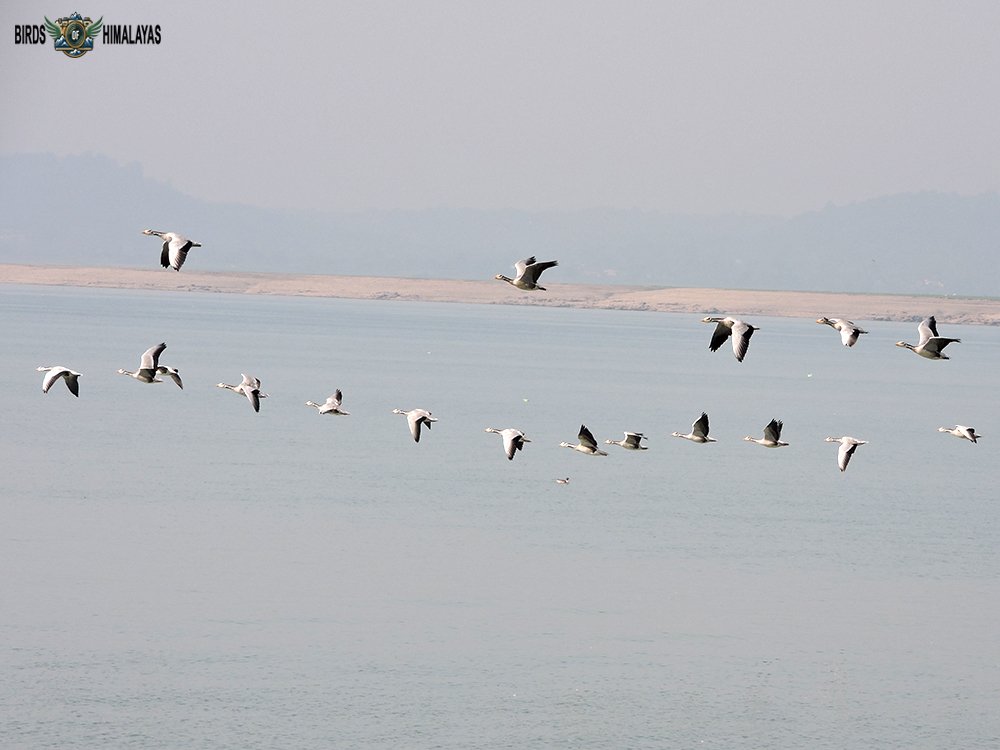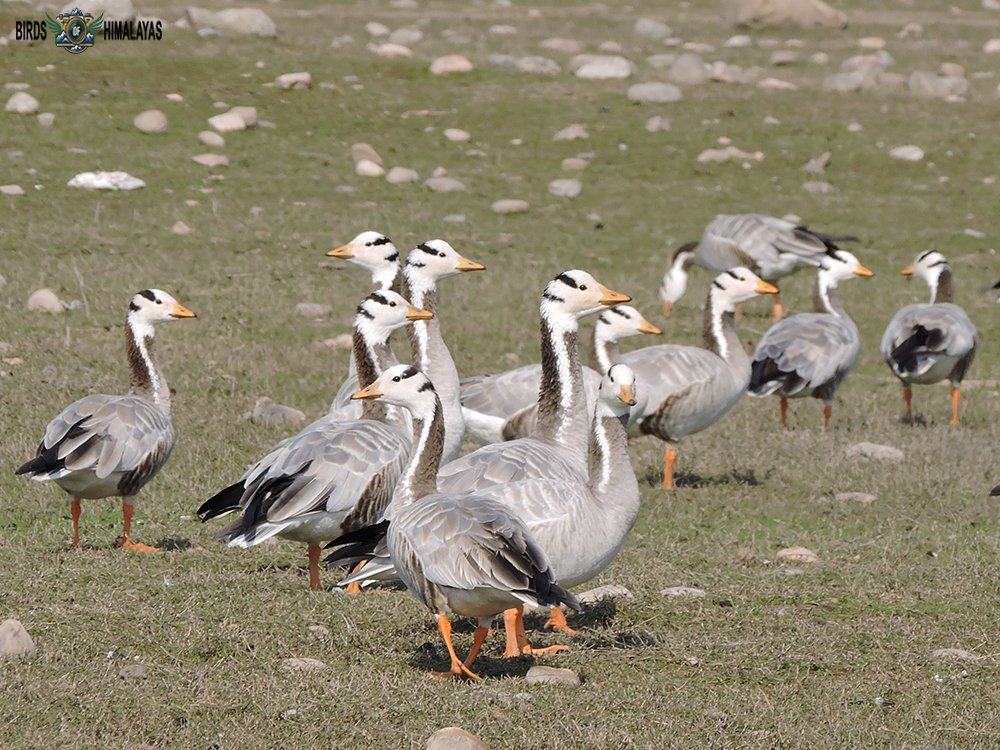
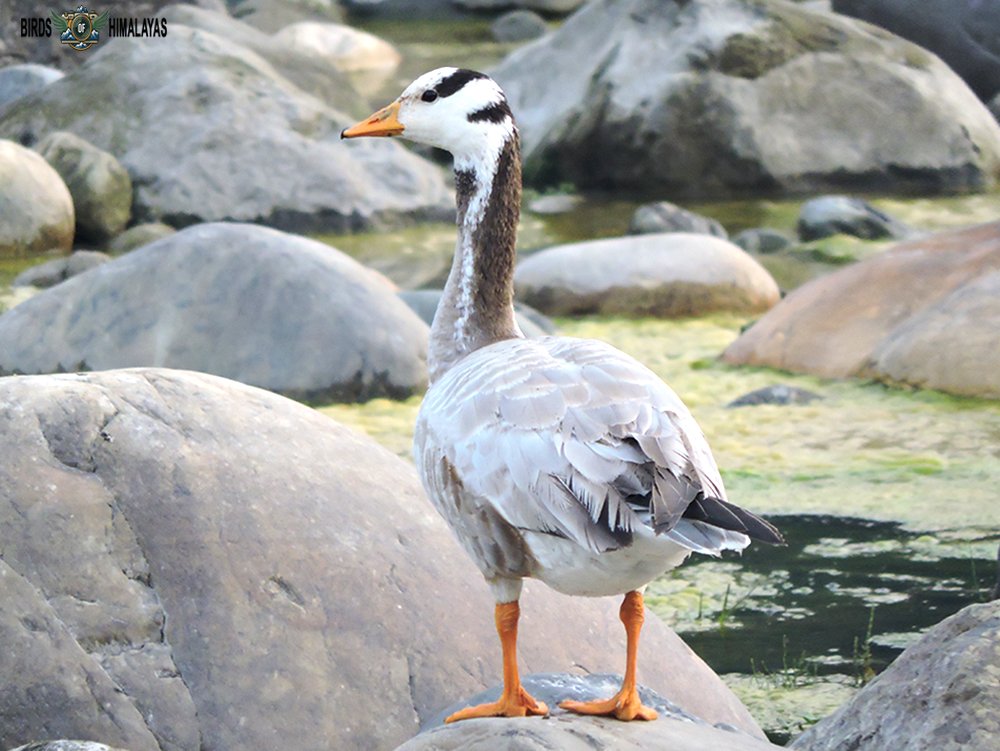
The Bar-headed Goose is a legendary, high-altitude migratory waterfowl measuring 71–76 cm, world-renowned for its physiological endurance in crossing the formidable Greater Himalayas during seasonal migrations. It is readily identified by its clean white head marked with two distinct, parallel brownish-black bars across the crown and nape, a slender white stripe extending down the dark sides of the neck, and an overall pale silver-grey body plumage. Its bill and legs are rich orange-yellow, and in flight it shows broad, rounded wings with striking black flight feathers. Gregarious and vocal, it gathers in expansive, noisy flocks along marshy shorelines, riverine islands, and grassy drawdown areas to graze on tender aquatic shoots, grasses, and grains. In Himachal Pradesh, it is a prominent winter visitor and passage migrant, arriving in tens of thousands at major foothill wetland sanctuaries—most notably Pong Dam Lake—from late autumn through early spring, typically between 300 and 1,200 meters elevation, while transient flocks pass over high-altitude passes.
Bar-headed Goose
Anser indicus
Anatidae (Ducks, Geese & Swans)
Common Winter Visitor / Passage Migrant
Lowland reservoirs & wetlands (~300–1,200 m); trans-Himalayan flyways above 5,000 m
Two black bars on white head, neck-stripe, silver-grey body, orange bill & legs
Resonant, musical nasal honking: a deep, repeated “a-ang, ang-ang” uttered in flight and on water